BCM289 Blog Post #1

Reality television has become a worldwide epidemic, infecting the TV of nations worldwide with shows centred on masked half-decent singers to extreme dating (even marriage). It is a genre that I find very entertaining, mainly for the drama or controversial personas, and that I was excited to explore in tutorials. Many find reality tv to be a great source of escapism, people who participate in these shows have a degree of relatability that A-List celebrities in TV dramas aren’t necessarily capable of. The shows are also cheap to produce and provide a new media market for producers to sell reality tv formats across borders. Unlike adaptations of fictional television, “…producers associate these trans-local meta-narratives with allegedly universal emotions” (Suna, 2018 p. 30). Through this reality tv framework, producers from other countries can translate a show into a culturally relevant version for their respective nation, and thus the show appeals to their target national demographic. Crossing borders with reality tv formats is a way of creating content that benefits the producers and appeals to the audiences’ desire for cultural proximity.
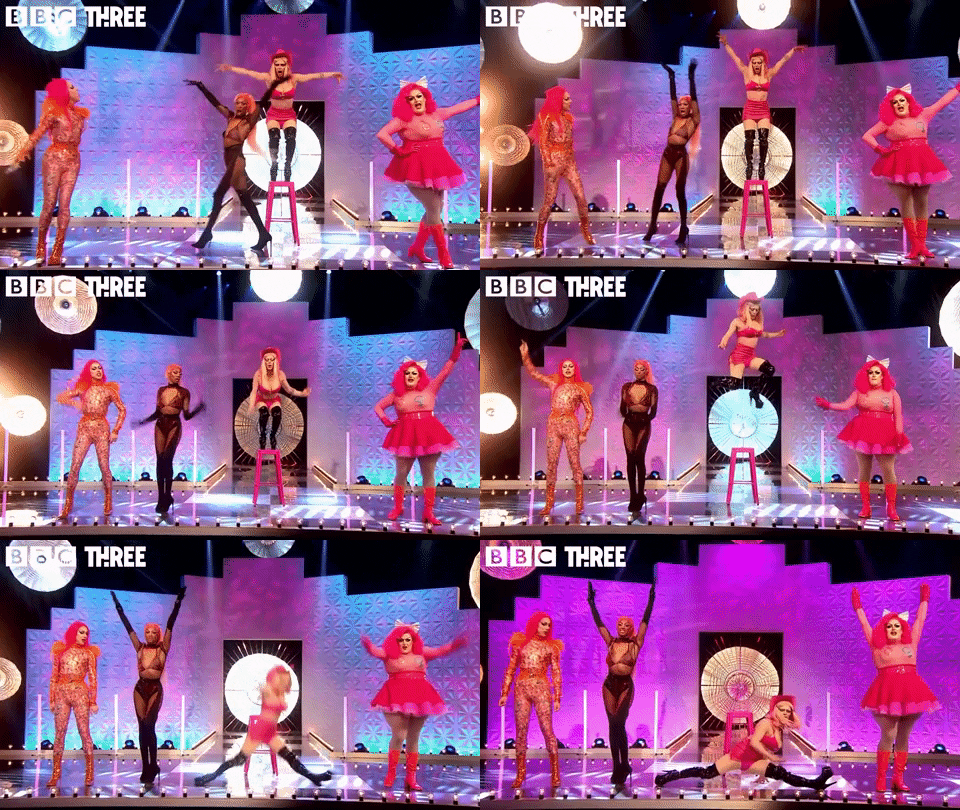
A great example of this (and a personal favourite of mine) is RuPaul’s Drag Race, originating in the US in 2009, RuPaul’s Drag Race has had major mainstream success, showcasing Drag queen excellence for 13 seasons (and counting) as well as 6 successful All-stars seasons. The format of RuPaul’s Drag Race has been successfully translated into several countries including Thailand, Holland, Canada, Spain, and the UK (and more). The series translated well to these countries due to the shared appreciation for the art of drag, the challenges were adapted in each series to represent the “local narratives” while staying under the same larger global framework of the show (Darling-Wolf, 2014).

The queens compete in the main challenge (and sometimes a mini challenge), present a themed runway for the judges and then the judges decide, based on the performances of the queens, who wins and which two must lip sync for their life to stay in the competition. This format stays the same, the iterations are presented through the different cultural references within each translation of the show, for example, The UK had a Eurovision style song challenge and the Canadian version used songs by Canadian artists like Alanis Morrisette and Deborah Cox during the lip syncs for your life.
The crossing of reality tv formats over borders demonstrates how the modern media environment functions, through trading and selling of formats to make something that works for one country work for another without the burden of individual countries coming up with their own or even stealing ideas. This allows nations to represent their distinctive national identity through a basic format and appeal to their local target audience. The modern media environment is full of translation, finding what works and translating it to fix a national context/culture, often leading to great success. Except for the poorly translated Australian version of the show, but we don’t talk about that.
Reference List
Darling-Wolf, F 2014, ‘Un-American Idols: How the Global/National/Local Intersect’, Imagining the Global: Transnational Media and Popular Culture Beyond East and West.
Suna, L 2018, ‘Negotiating Belonging as Cultural Proximity in the Process of Adapting Global Reality TV Formats’, Media and communication (Lisboa), vol. 6, no. 3, pp. 30–39.
 Hallie Rutter
Leave a comment